Lezing Does planet formation produce ‘carbon copies’ of Earth? (Leiden, in English)
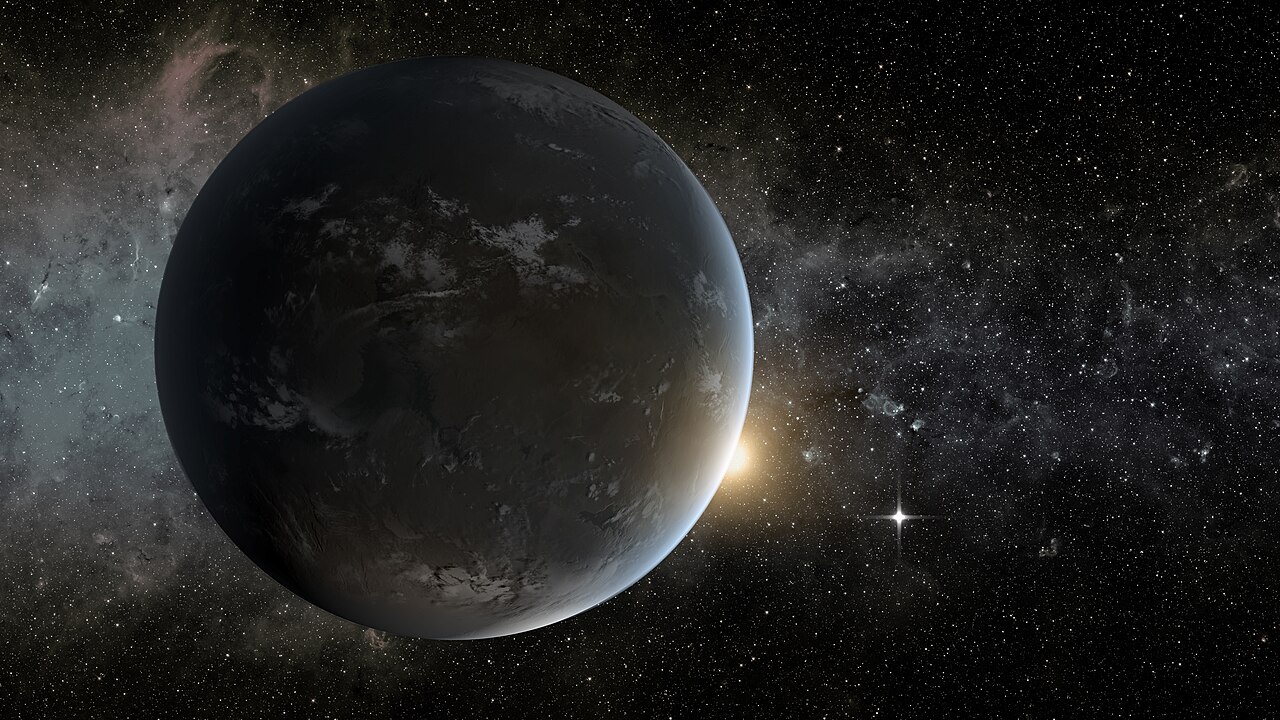
In deze lezing vertelt Melissa McClure hoe verschillende planeetsystemen ontstaan en welke condities kunnen leiden tot rotsachtige exoplaneten die vergelijkbaar zijn met de aarde. De lezing wordt in het Engels gegeven en vormt het startschot van de Kaiser Spring Lectures van de Oude Sterrewacht in Leiden. Hier onder is een Engelse beschrijving te vinden.
Our planet Earth teems with life, but the rise of life on Earth, and its continued existence to this day, may have occurred due to a unique combination of lucky chances during its formation and subsequent evolution. Within the last three decades, thousands of planets have been identified outside of our Solar System, of which only a handful are known to be similar to Earth in size and mass. Most other planets are either rocky, but larger than Earth, or potentially gassy, but smaller than Neptune. Even for similarly-sized planets, having the same size and mass as Earth is insufficient to guarantee a similar degree of habitability. It is not at all clear that Earth 2.0 would truly be a ‘carbon copy’ of Earth 1.0.
Carbon and other key elemental ingredients of life are carried largely as icy molecules in the dusty, gaseous disks from which planets form around young stars. The Earth and other rocky planets are believed to have been assembled from the solid components of these disks over several million years, in regions of these disks that are believed to be depleted in icy elements but rich in rocky elements, like iron and silicon. However, the composition of disk solids evolves rapidly over the disk’s lifetime. Different mechanisms for planet formation depend on how much solid material may be available to clump into planetesimals, and these mechanisms favor certain sizes of planets, which is in turn linked to their compositions.
Over de spreker
Melissa McClure is universitair docent aan de Sterrewacht Leiden van de Universiteit Leiden. Ze doet onderzoek naar het ontstaan van exoplaneten.
Deze lezing is onderdeel van de Kaiser Spring Lectures die deze lente op de Oude Sterrewacht in Leiden worden gegeven. Er zijn vijf lezingen door astronomen met als thema One in a Million? Looking for a second Earth. Meer informatie over de Kaiser Spring Lectures is hier te vinden.
Lezing Does planet formation produce ‘carbon copies’ of Earth?
Melissa McClure (Leiden Observatory)
zaterdag 7 maart 2026, 14.00 tot 15.30 uur
Oude Sterrewacht Leiden, Sterrewachtlaan 11, 2311 GW Leiden
Entree € 5,80 euro (€ 6,80 inclusief tour van de Oude Sterrewacht)
Meer informatie en tickets